Home » Link Gulf – Main Store Page » FDM 3D Printers » Bambu Lab H2C AMS Combo

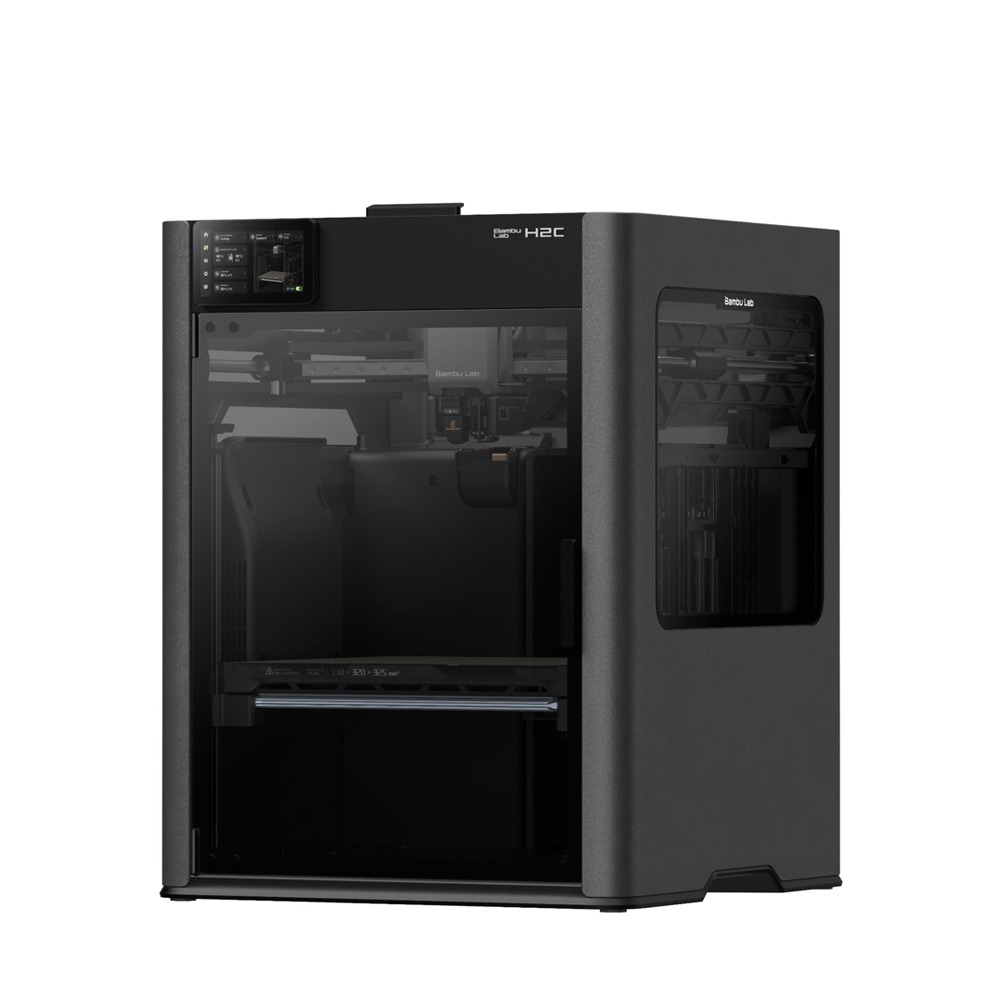
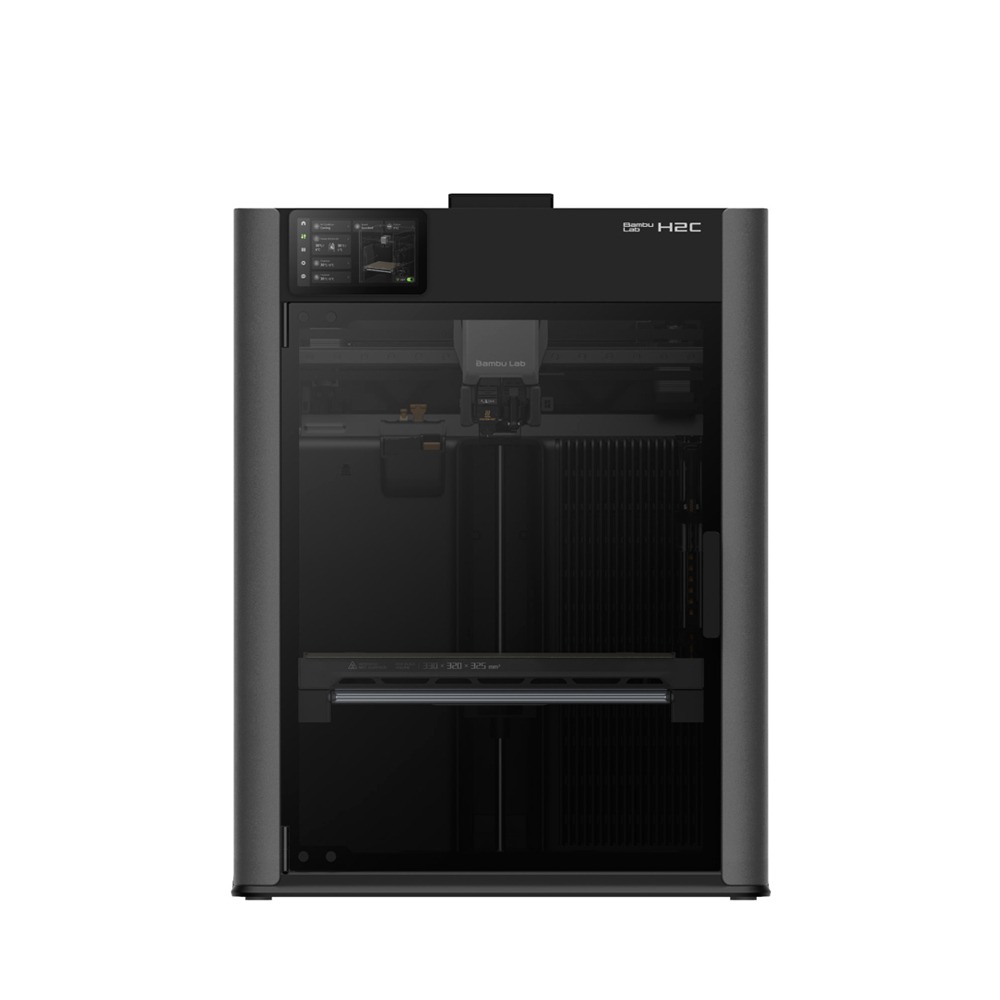


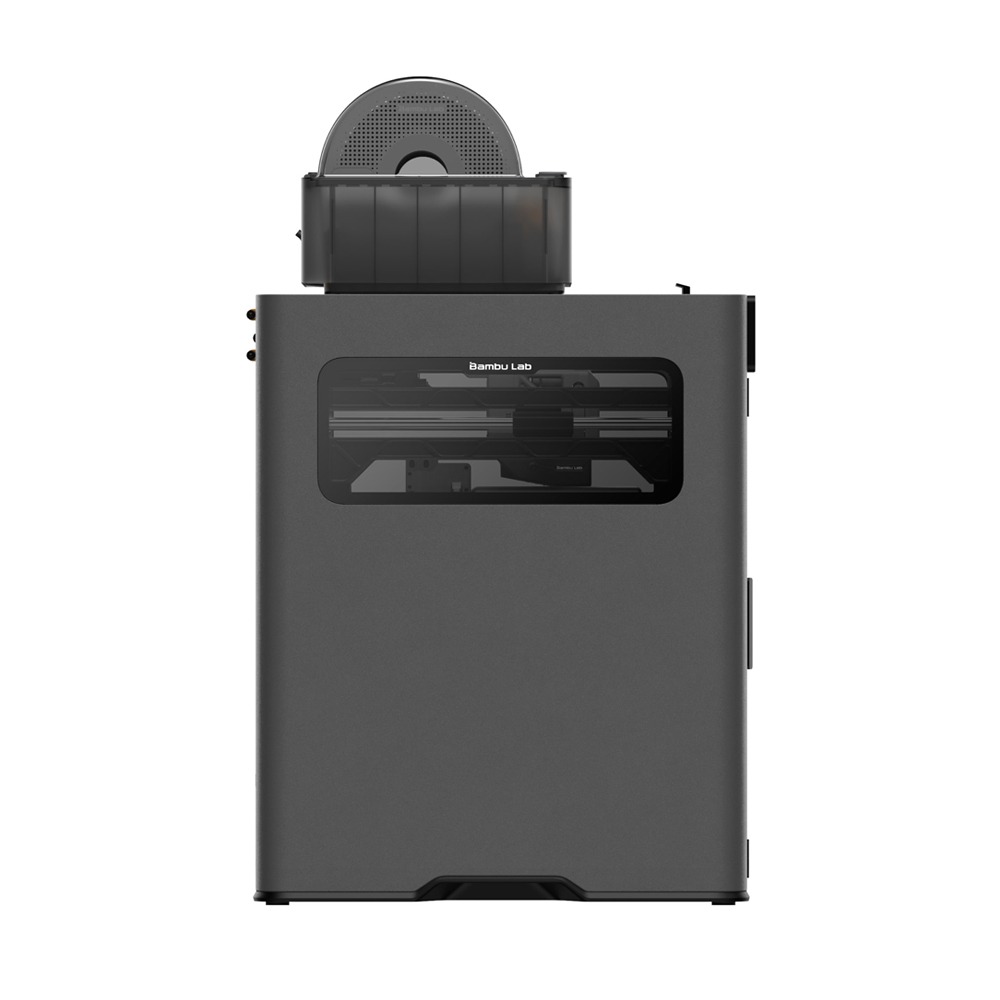
The Bambu Lab H2C AMS Combo is a Production Powerhouse. Uncompromising Multi-Material, Multi-Colour printing means that painting intricate models is a thing of the past — the H2C brings your designs to life with six-colour printing and a versatile seventh nozzle for support or an additional colour.
* To connect more than one AMS(including AMS 2 Pro, AMS HT), a 4-in-1 PTFE Adapter (FAZ013-N) is needed.
Pre-Order Now
11,275.00
Prices shown are for the United Arab Emirates only and exclude VAT @ 5% Local Rate (Unless Otherwise Stated).
Other countries may incur additional import duties.
Please Contact Us for further details and pricing for your country or location.
Pre-Order Now
The Bambu Lab H2C AMS Combo is a Production Powerhouse. Uncompromising Multi-Material, Multi-Colour printing means that painting intricate models is a thing of the past — the H2C brings your designs to life with six-colour printing and a versatile seventh nozzle for support or an additional colour.
* To connect more than one AMS(including AMS 2 Pro, AMS HT), a 4-in-1 PTFE Adapter (FAZ013-N) is needed.
Paint No More, Print 7 Colours in One Piece with Purge Saving Multi-Colour Printing
With the H2C, you can print up to seven different materials in a single run — no nozzle purging required. Combine multiple material properties in one seamless structure and take integrated design to a whole new level.
Print durable TPU ball joints for your robot models — flexible, long-lasting, and built for endless motion.
In traditional single-nozzle multi-material printing, purging is neededto clear leftover material between filament changes. Vortek changes that with an intelligent hotend-swapping system that replaces the entire hotend – delivering faster, cleaner prints with minimal waste.
The Vortek system works seamlessly with our highly reliable AMS (Automatic Material System), making the entire filament change process fully automatic – no need to manually load each filament into the toolhead.
The Vortek system can store filament information in the hotend’s memory, ensuring the correct filament is matched to each hotend. If you are printing with more than seven filament types, the system can calculate the optimal combination to minimise purge waste.
Because only the hotend is swapped, the system can house up to six replaceable hotends without significantly reducing the build volume. That means more materials, more colours, and more possibilities – all in one print.
Our industry-leading induction heating technology brings the nozzle to temperature in 8-seconds, significantly reducing the preheating time for each material swap, compared to traditional methods.
Our high standards for reliability led us to move away from contact-based metal pins, which are prone to oxidation and unstable connections. We developed a contactless solution that ensures a stable, high-frequency connection – the foundation for precise temperature control and intelligent hotend sync.
Unlike traditional tool-changer printers that limit colour count by the number of toolheads, the H2C supports up to 24 materials in a single print, through parallel-connected AMS units. Its intelligent algorithm optimises filament-to-hotend allocation to minimise purge waste, while delivering outstanding multi-colour and multi-material results.
With its seamless enclosure and adaptive airflow system, the H2C maintains a stable chamber temperature for high-performance materials and filters the air to keep your workspace clean and safe.
Our inductive nozzle offset calibration is fully automated – no manual steps, no calibration plates, no extra setup. In just a few minutes, the H2c precisely calibrates the nozzle offset to within 25 microns.*
The H2C’s Vortek system lets you dedicate one of its six interchangeable hotends to specific filaments – a game-changer for valuable engineering materials. This ensures superior consistency and reliability across prints. Each hotend can even automatically store filament information, so the next time you load that material, it’s instantly matched to the correct hotend.
The PMSM servo extruder delivers up to 10 kg of maximum extrusion force—70% more than a stepper motor—dramatically improving high-flow-rate extrusion stability. Our proprietary servo architecture samples resistance and position at 20 kHz, actively detecting filament grinding and clogs in real time.
With its Vision Encoder, the H2C achieves a distance-independent motion accuracy of less than 50 μm—thinner than human hair. The system automatically compensates for any mechanical drift during calibration, ensuring consistent precision and peak performance over time.*
The H2C leverages both the servo motor on the extruder and the high-resolution eddy current sensors on the nozzle to sense extrusion dynamics. This enables precise extrusion control and automatic calibration of Pressure Advance (PA) parameters for each filament, resulting in smoother surfaces and cleaner, sharper edges.
The H2C’s 65 °C actively heated chamber & 350°C nozzles minimise warping and deformation while enhancing layer adhesion for high-performance, high-temperature filaments.
The H2C is equipped with an array of 59 sensors* and a quad-camera computer vision system, all orchestrated by our proprietary neural algorithm. During printing, this system delivers intelligent, real-time diagnostics that can detect even the most subtle print anomalies as they happen. You don’t have to be an expert to solve problems—your printer does the job for you.
The H2C features an AI-backed camera system. This intelligent monitoring system continuously tracks extrusion patterns, immediately detecting material accumulation, filament deviations, and extrusion failures. Also runs a pre-flight scan to ensure a safe start.
The H2C’s three-stage filtration system is essential for printing with engineering filaments. This powerful combination of a G3 pre-filter, an H12 HEPA filter, and a coconut shell activated carbon filter effectively minimises the odours and harmful particulates often released by engineering materials.
The H2C’s chamber is constructed entirely with flame-retardant material, providing robust, passive fire safety protection across the entire enclosure.
The H2C offers convenient cloud connectivity for remote control from any device. For security-sensitive applications, it also provides full offline functionality, ensuring complete physical isolation. Users can operate the printer, send files, and update firmware without an internet connection. For advanced users, Developer Mode enables MQTT port access for integrating third-party components and software.*
| Item | Specifications | |
| Printing Technology |
Fused Deposition Modelling
|
|
| Body | Build Volume (W*D*H) |
Single Nozzle Printing: 325*320*320 mm³ (Left)
Single Nozzle Printing: 305*320*325 mm³ (Right)
Dual Nozzle Printing: 300*320*325 mm³
Total Volume for Two Nozzles: 330*320*325 mm³
|
| Chassis |
Aluminum and Steel
|
|
|
Outer Frame
|
Plastic and Glass
|
|
| Physical Dimensions | Physical Dimensions |
492*514*626 mm³
Recommended Space for Printer: 700mm*700mm*1100mm
|
| Net Weight |
32.5 kg
|
|
| Toolhead | Extruder Gear | Hardened Steel |
| Nozzle | Hardened Steel | |
| Max Nozzle Temperature | 350 °C | |
| Supported Nozzle Diameter | 0.2 mm, 0.4 mm, 0.6 mm, 0.8 mm | |
|
Filament Cutter
|
Built-in
|
|
| Filament Diameter | 1.75 mm | |
| Extruder Motor | Bambu Lab High-precision Permanent Magnet Synchronous Motor | |
| Heatbed |
Build Plate Material
|
Flexible Steel Plate
|
|
Included Build Plate Type
|
Textured PEI Plate
|
|
| Supported Build Plate Type |
Textured PEI plate, Engineering Plate
|
|
| Max Heatbed Temperature | 120 ℃ | |
| Speed | Max Speed of Toolhead | 1000 mm/s |
| Max Acceleration of Toolhead | 20,000 mm/s² | |
|
Max Flow for Hotend
|
40 mm³/s
(Test parameters: 250 mm round model with a single outer wall; Bambu Lab ABS; 280 °C printing temperature)
|
|
|
Chamber Temperature Control
|
Active Chamber Heating
|
Supported
|
|
Max Temperature
|
65 °C
|
|
|
Air Purification
|
Pre-filter Grade
|
G3 |
|
HEPA Filter Grade
|
H12
|
|
|
Activated Carbon Filter Type
|
Granulated Coconut Shell
|
|
|
VOC Filtration
|
Superior
|
|
|
Particulate Matter Filtration
|
Supported
|
|
|
Cooling
|
Part Cooling Fan
|
Closed Loop Control
|
|
Cooling Fan for Hotend
|
Closed Loop Control
|
|
|
Main Control Board Fan
|
Closed Loop Control
|
|
|
Chamber Exhaust Fan
|
Closed Loop Control
|
|
|
Chamber Heat Circulation Fan
|
Closed Loop Control
|
|
|
Auxiliary Part Cooling Fan
|
Closed Loop Control
|
|
|
Toolhead Enhanced Cooling Fan
|
Closed Loop Control
|
|
|
Supported Filament Type
|
PLA, PETG, TPU, PVA, BVOH, ABS, ASA, PC, PA, PET, PPS; Carbon/Glass Fibre Reinforced PLA, PETG, PA, PET, PC, ABS, ASA, PPA, PPS
|
|
| Sensor |
Live View Camera
|
Built-in; 1920*1080
|
|
Nozzle Camera
|
Built-in; 1920*1080
|
|
|
BirdsEye Camera
|
Built-in; 3264*2448 (Equipped with Laser Edition)
|
|
|
Toolhead Camera
|
Built-in; 1600*1200
|
|
| Door Sensor | Supported | |
| Filament Run Out Sensor | Supported | |
| Filament Tangle Sensor | Supported | |
| Filament Odometry | Supported with AMS | |
| Power Loss Recovery | Supported | |
| Electrical Requirements | Voltage |
100-120 VAC / 200-240 VAC, 50/60 Hz
|
| Max Power* |
1800 W@220 V/1250 W@110 V
|
|
|
Typical Power
|
200 W@220 V/200 W@110 V (Single Nozzle Printing PLA)
|
|
|
Working Temperature
|
|
10 °C-30 °C
|
| Electronics | Touchscreen |
5-inch 720*1280 Touchscreen
|
| Storage |
Built-in 8 GB EMMC and USB Port
|
|
| Control Interface | Touchscreen, mobile App, PC App | |
|
Motion Controller
|
Dual-core Cortex-M4 and Single-core Cortex-M7
|
|
|
Application Processor
|
Quad-core ARM with NPU
|
|
| Software | Slicer |
Bambu Studio
Supports third-party slicers which export standard G-code, such as Super Slicer, PrusaSlicer and Cura, but certain advanced features may not be supported.
|
| Supported Operating System |
MacOS, Windows, Linux
|
|
|
Network Control
|
Ethernet
|
Not Available
|
|
Wireless Network
|
Wi-Fi
|
|
|
Network Kill Switch
|
Not Available
|
|
|
Removable Network Module
|
Not Available
|
|
|
802.1X Network Access Control
|
Not Available
|
|
| Wi-Fi | Operating Frequency |
2412 – 2472 MHz, 5150 – 5850 MHz (FCC/CE)
2400 – 2483.5 MHz, 5150 – 5850 MHz (SRRC)
|
| Wi-Fi Transmitter Power (EIRP) |
2.4 GHz: <23 dBm (FCC); <20 dBm (CE/SRRC/MIC)
5 GHz Band1/2: <23 dBm (FCC/CE/SRRC/MIC)
5 GHz Band3: <30 dBm (CE); <24 dBm (FCC)
5 GHz Band4: <23 dBm (FCC/SRRC); <14 dBm (CE)
|
|
| Wi-Fi Protocol | IEEE 802.11 a/b/g/n | |