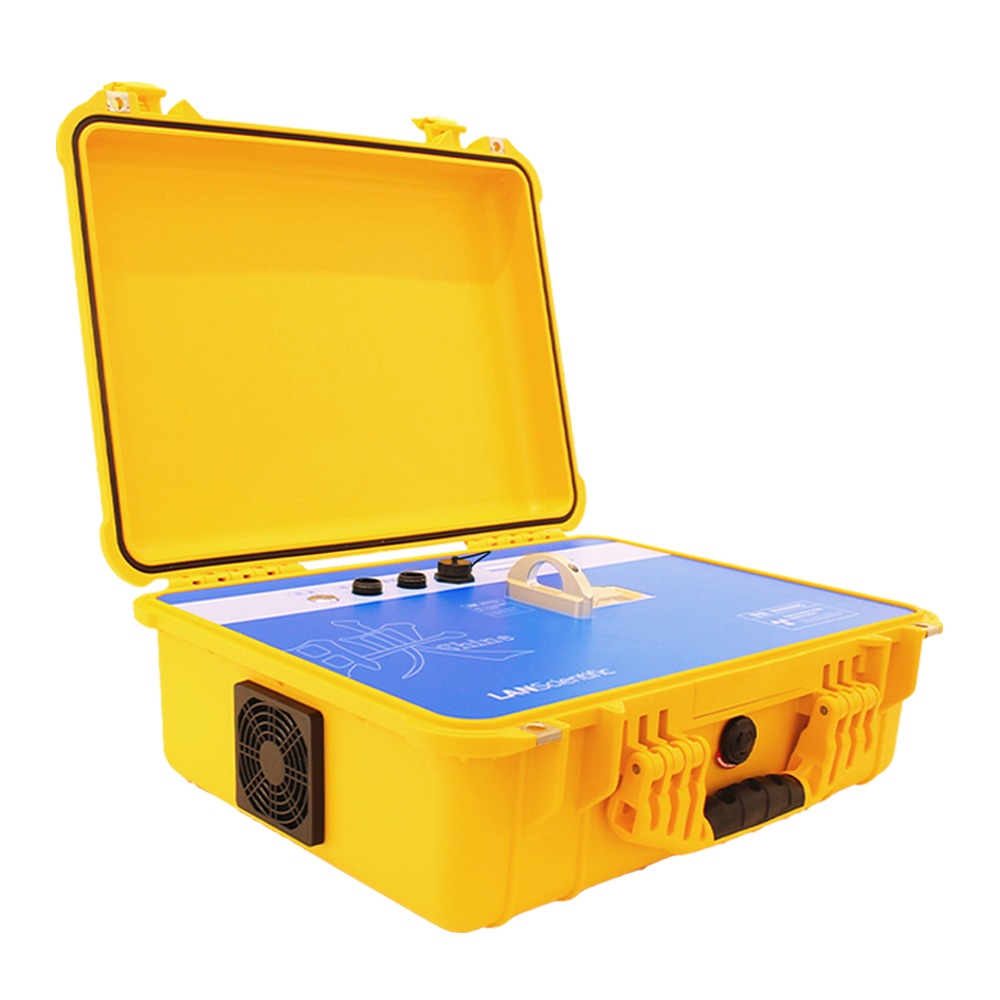
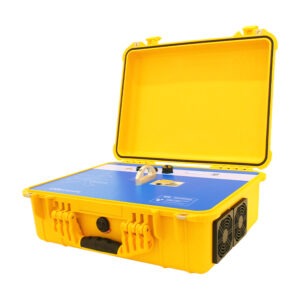
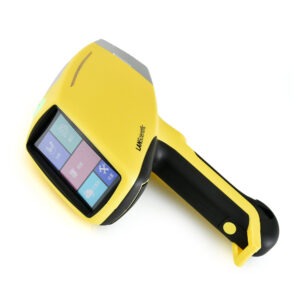
SHINE Soil Edition X-Ray Diffractometer
Basic principles of X-Ray diffraction: When a beam of monochromatic X-Ray incident to crystal, because the crystal is made up of atomic rules are arranged into a cell, the rules of the distance between the atoms and the incident X-Ray wavelength with the same order of magnitude, so by the different atomic scattering X-Ray mutual interference, stronger effects in some special directions X-Ray diffraction, the diffraction lines in the spatial distribution of location and intensity, is closely related to the crystal structure.
Clay minerals are the main body of interaction between charged particles in soil. Studies show that there are more than ten types of clay minerals. The main types are chlorite, kaolinite, illite, montmorillonite and illite/montmorillonite.
The types of clay minerals are different in different areas, and their content is also very different in different areas. Furthermore, each reservoir varies greatly in plane and vertical.
SHINE portable X-Ray diffraction (soil edition) is designed for clay minerals content identification and equipment research and development of a portable X-Ray diffraction, it can be based on different clay minerals content of the crystal structure, quickly identify clay mineral type and the specific percentage of the, even small granular mineral can determine accurately, It is the main method of clay mineral identification with the advantages of simple sample preparation, fast and high measurement accuracy.
Advantages
Portable
The instrument adopts waterproof and dustproof box all-in-one machine design, without any mechanical moving parts. Also, it is light and compact, convenient to carry, and can freely carry out laboratory/field field scientific research.
Integration
XRD and XRF technology integration, in each test, can simultaneously collect XRD and XRF X-ray photon data. This will provide material composition, phase and structure information, so as to promote more accurate test results.
Simplicity
Instrument one-key operation, no correction, automatic detection, no extra attention to the high pressure system and water circulation cooling system (instrument without additional high pressure and water circulation cooling system).
Data transmission
The instrument through USB, Bluetooth, WIFI and laptop computer to achieve high-speed connection. Therefore, you can perform real-time SHINE instrument control and phase analysis.
Two Dimensional X-Ray Diffractometer
The instrument is equipped with a charge coupled device (CCD) detector, which can take slices of the diffraction ring to help the user know if the sample has been prepared correctly (particle statistics and/or preferred grain orientation). So as to further help users to confirm whether the obtained qualitative and quantitative data is accurate and representative.
Flexibility
According to the needs of users specific applications, we provide customers with two different anode targets for Cu/Co targets.
Application scenarios
- Green development of agriculture
- Soil pollution control
- Environmental indicator study